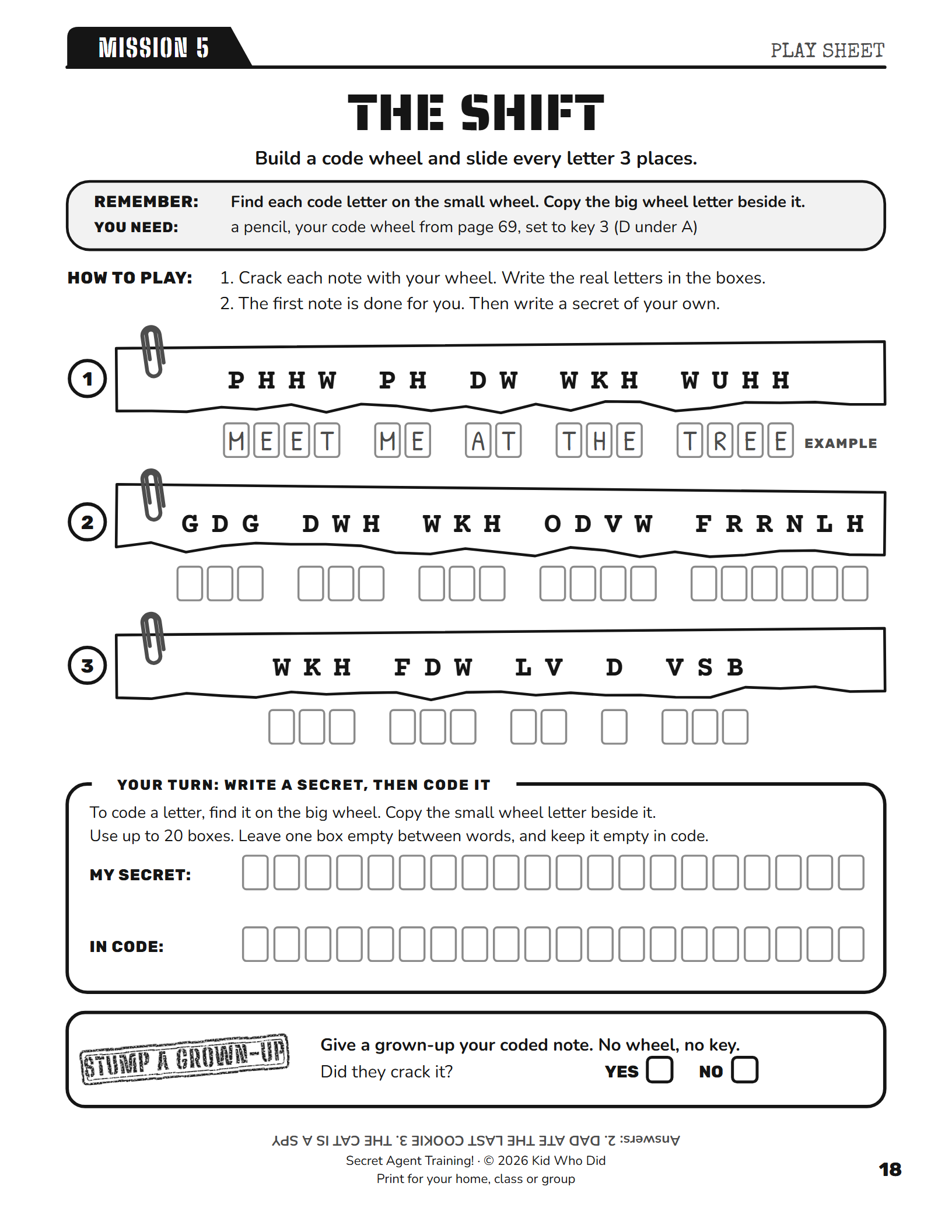
A note turns up in your lunch bag: GDG DWH WKH ODVW FRRNLH. You'll need your kid's code wheel to read it.
Watch three more missions
Every mission is a lesson page and a play sheet. Some are solo puzzles; others need a partner or a grown-up.
Mission 11
Crayon Invisible Ink
Write in white crayon, then paint to make it appear.
The paper: a blank message card
You'll need: a white crayon, watercolors, a brush
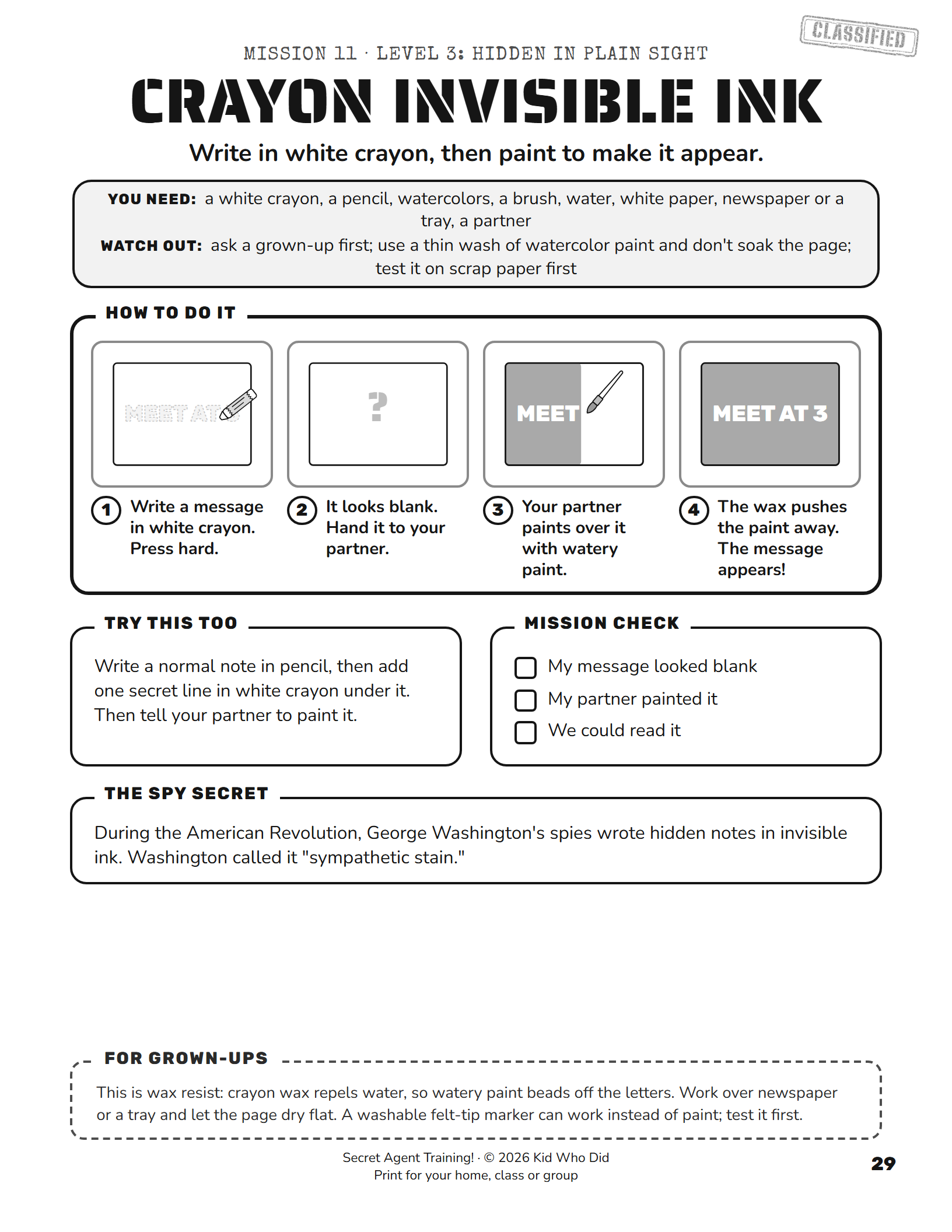
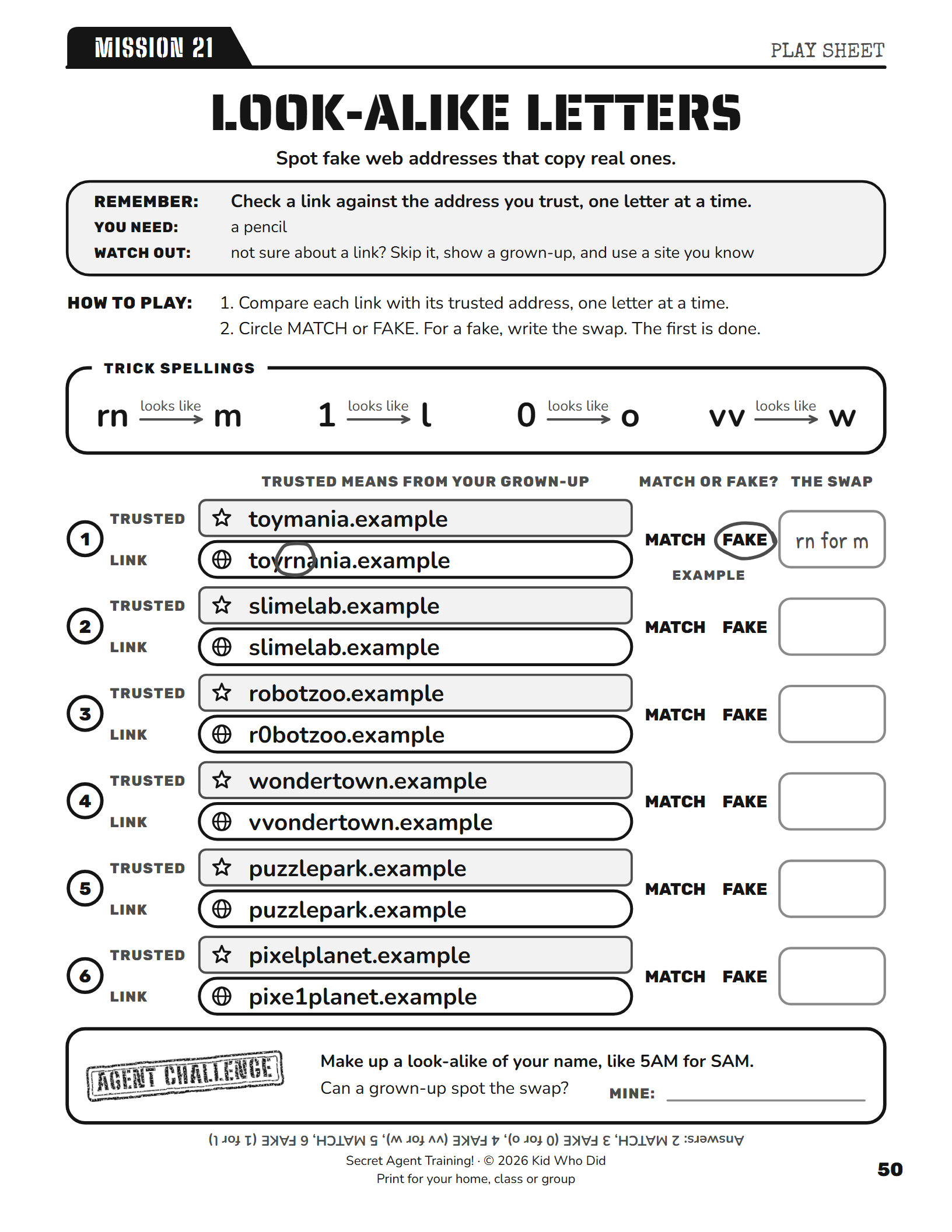
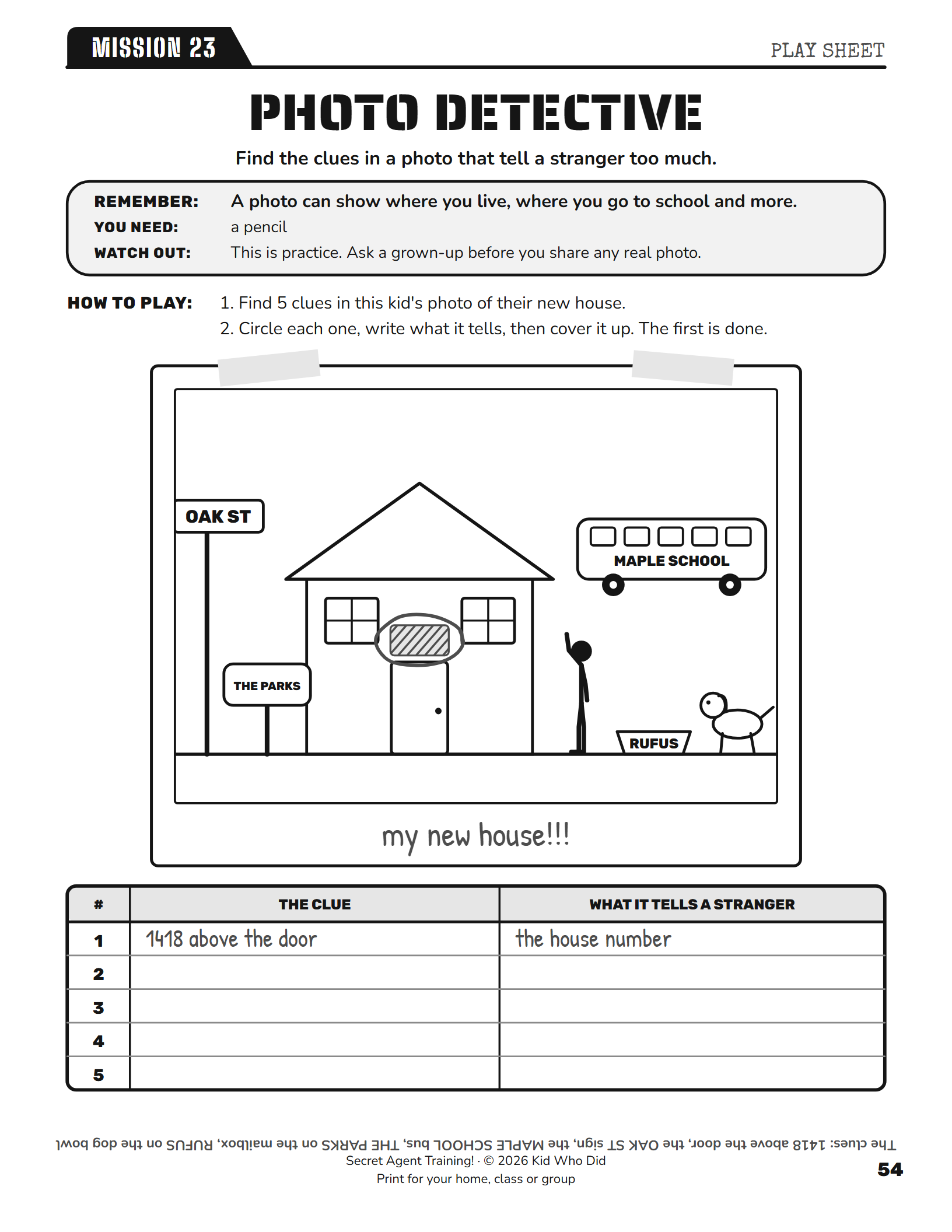
The page in the book. Tap it to look closer.
What it looks like at your house
Saturday's treasure hunt runs on clues your kid wrote in code, and you're the one stuck on clue three.
A text says you won a gift card. Your kid compares the link with the real address and says, "That doesn't match. Look at the m."
Spy skills, with house rules
A spy book could teach sneaky habits. This one opens with the Agent Rules on page 5, and every mission follows them.
- Codes are for games and surprises. Your agent can always show them to a safe grown-up.
- Spy on puzzles and games, never on people.
- Ask before you dust anything for prints.
- Online, use your codename. Your real name, school and address stay private.
- If something online feels like a trick, show a grown-up.
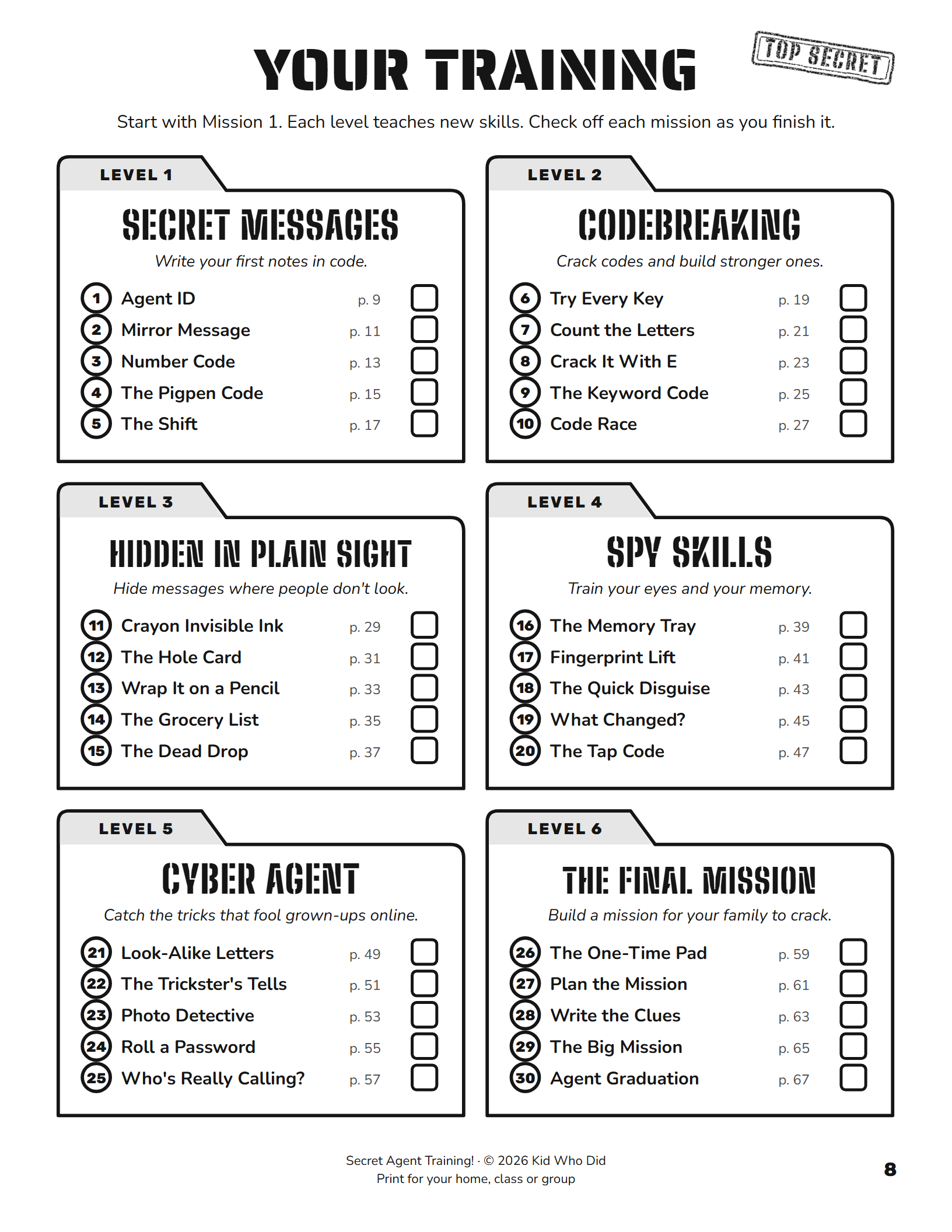
30 missions, from a first code to a mission for the whole family
marks the missions that also teach an online safety skill.
Level 1
Secret Messages
Write your first notes in code.
- 1Agent ID
- 2Mirror Message
- 3Number Code
- 4The Pigpen Code
- 5The Shift
Level 2
Codebreaking
Crack codes and build stronger ones.
- 6Try Every Key
- 7Count the Letters
- 8Crack It With E
- 9The Keyword Code
- 10Code Race
Level 3
Hidden in Plain Sight
Hide messages where people don't look.
- 11Crayon Invisible Ink
- 12The Hole Card
- 13Wrap It on a Pencil
- 14The Grocery List
- 15The Dead Drop
Level 4
Spy Skills
Train your eyes and your memory.
- 16The Memory Tray
- 17Fingerprint Lift
- 18The Quick Disguise
- 19What Changed?
- 20The Tap Code
Level 5
Cyber Agent
Catch the tricks that fool grown-ups online.
- 21Look-Alike Letters
- 22The Trickster's Tells
- 23Photo Detective
- 24Roll a Password
- 25Who's Really Calling?
Level 6
The Final Mission
Build a mission for your family to crack.
- 26The One-Time Pad
- 27Plan the Mission
- 28Write the Clues
- 29The Big Mission
- 30Agent Graduation
Open it to any page
Black and white, US Letter, made to print at home. Tap a page to see it up close.
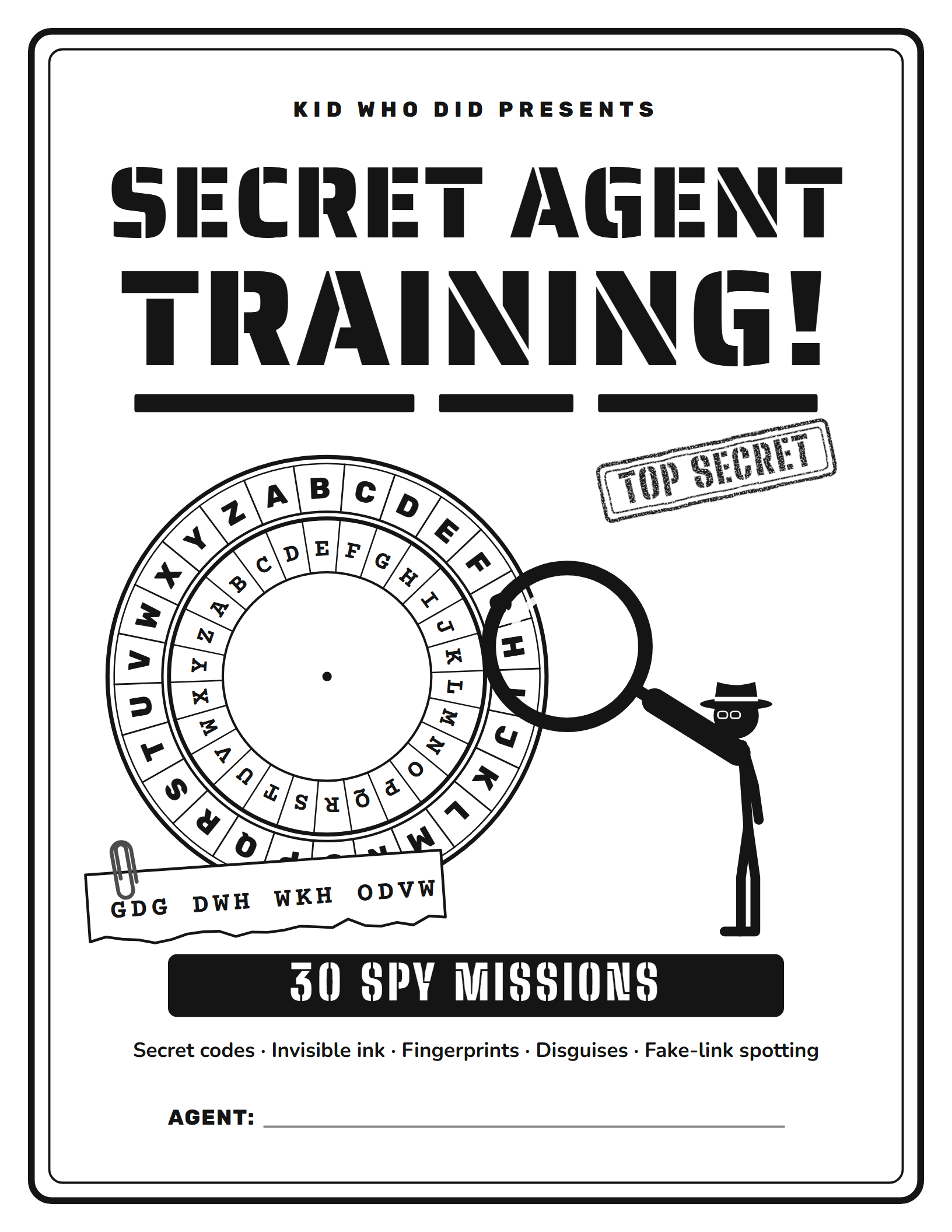
The paper does part of the work
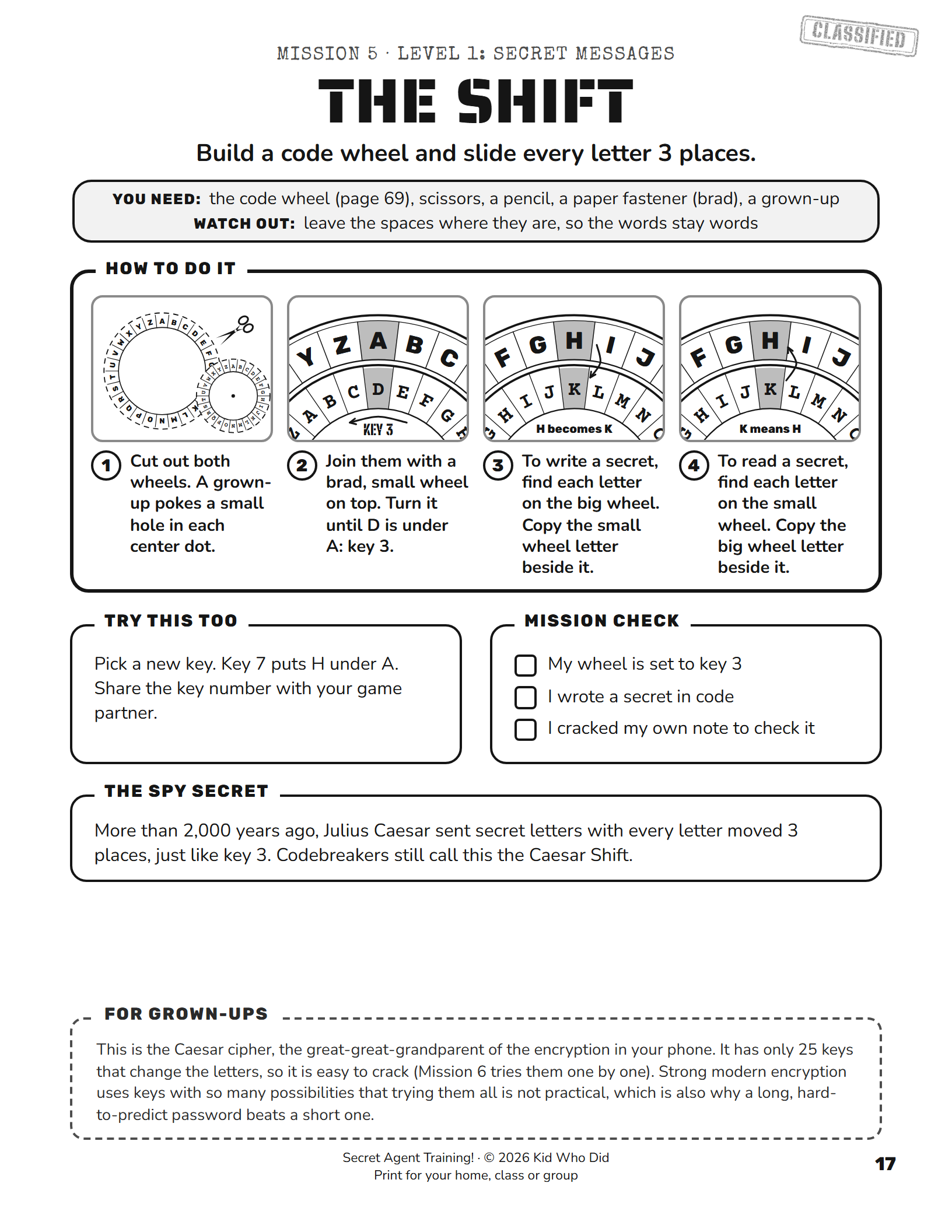
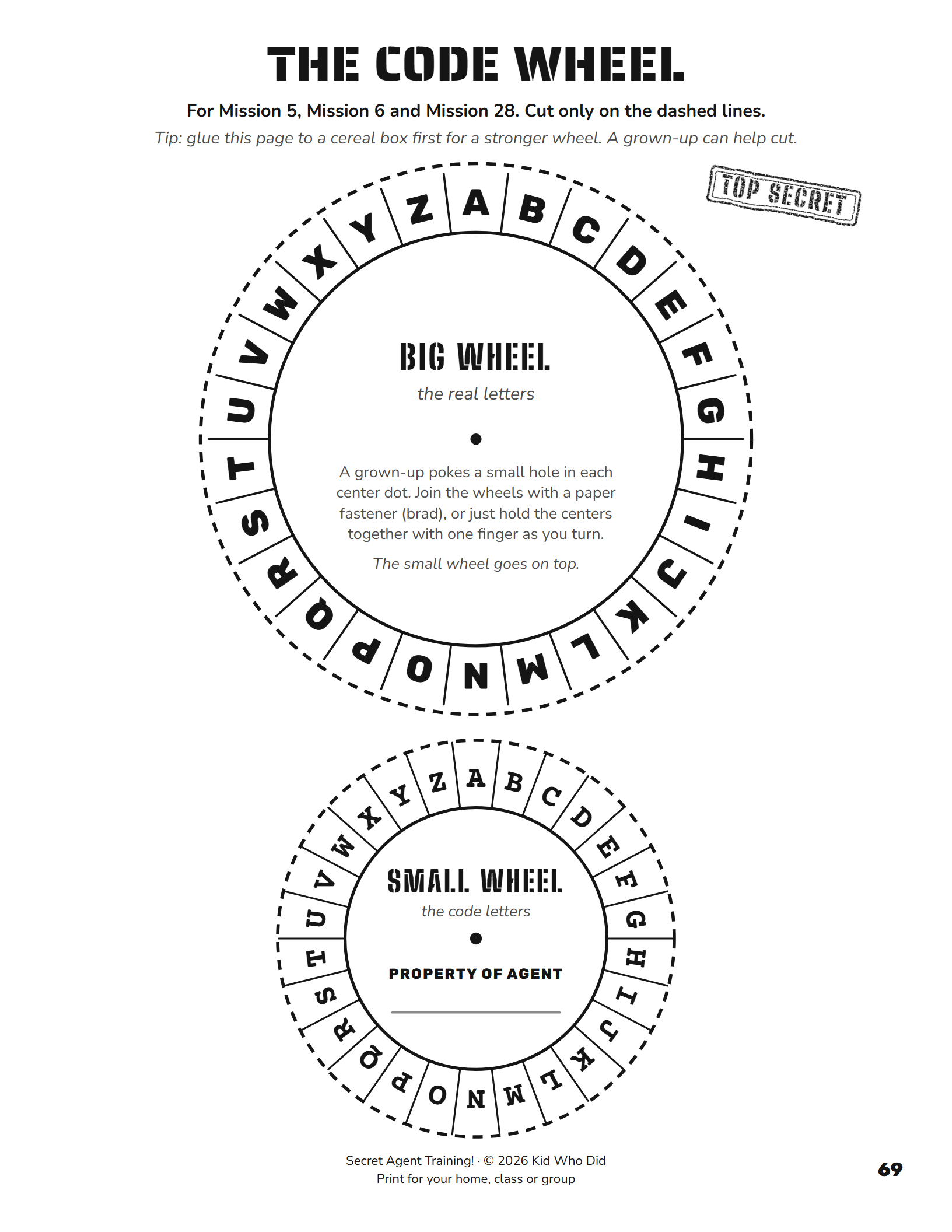
Mission 5's code wheel is a page in the book. Print it and cut out the two circles. A grown-up pokes a small hole in each center, and a paper fastener joins them. Your kid now has the same wheel as the one at the top of this page.
Other missions come with their own tools to cut out: a hole card that finds words hidden in a page of letters, strips to wind around a pencil, signal cards for a dead drop and a dice word list for building practice passwords.
Tip from the book: glue the wheel page to a cereal box first, and the wheel lasts.
To: Grown-ups
From: Kid Who Did
Re: What the missions are really teaching
Kids pick this book for the spy stuff. Along the way, 10 of the missions connect spy skills to online-safety habits, and each one has a note to help you talk about it.
- Mission 1: Agent IDCodenames are a real privacy habit. For games and apps, help your agent pick a username that doesn't show their real name, birthday or school.
- Mission 5: The ShiftThis is the Caesar cipher, the great-great-grandparent of the encryption in your phone. It has only 25 keys that change the letters, so it is easy to crack (Mission 6 tries them one by one). Strong modern encryption uses keys with so many possibilities that trying them all is not practical, which is also why a long, hard-to-predict password beats a short one.
- Mission 6: Try Every KeyWhen a code has only a few keys, you can try them all. Attackers guess passwords the same way, so short, predictable ones fall first. Many devices and websites also slow down or block repeated guesses.
- Mission 9: The Keyword CodeA keyword mixes up the alphabet in far more ways than a shift, but letter patterns can still crack it (Mission 8 shows how). Real passwords need to be long, unique and hard to predict.
- Mission 17: Fingerprint LiftSome phones unlock by comparing the tiny details of a fingerprint with a saved pattern. The loop, whorl or arch shape alone is not enough to unlock a phone.
- Mission 21: Look-Alike LettersComparing an address with one you already trust, letter by letter, can show a look-alike (rn for m, 1 for l). If a link seems odd, stop and show a grown-up, and go to websites you already know.
- Mission 22: The Trickster's TellsThe same warning signs show up in phishing emails, scam texts and game-chat scams.
- Mission 23: Photo DetectiveKeep details that point to your home or school out of public posts, like house numbers, street signs and school names. Don't use a pet's name as a password, and choose security-question answers other people can't find out.
- Mission 24: Roll a PasswordRandom words picked with dice make passwords that beat clever swaps like p@ssw0rd, but this short list is for practice only. For real accounts, help your agent use a password manager, or roll six or more words from a big list like the EFF's, with a different password for every account.
- Mission 25: Who's Really Calling?Agree on a private family password. If a call sounds urgent or strange, hang up and call the person back on a number you already know. Practice with a pretend password, and choose the real one privately.
What you get for $27
- The printable book: 30 missions, each with a lesson page and a play sheet.
- The cut-outs: the code wheel, the hole card, pencil strips, signal cards and the dice word list.
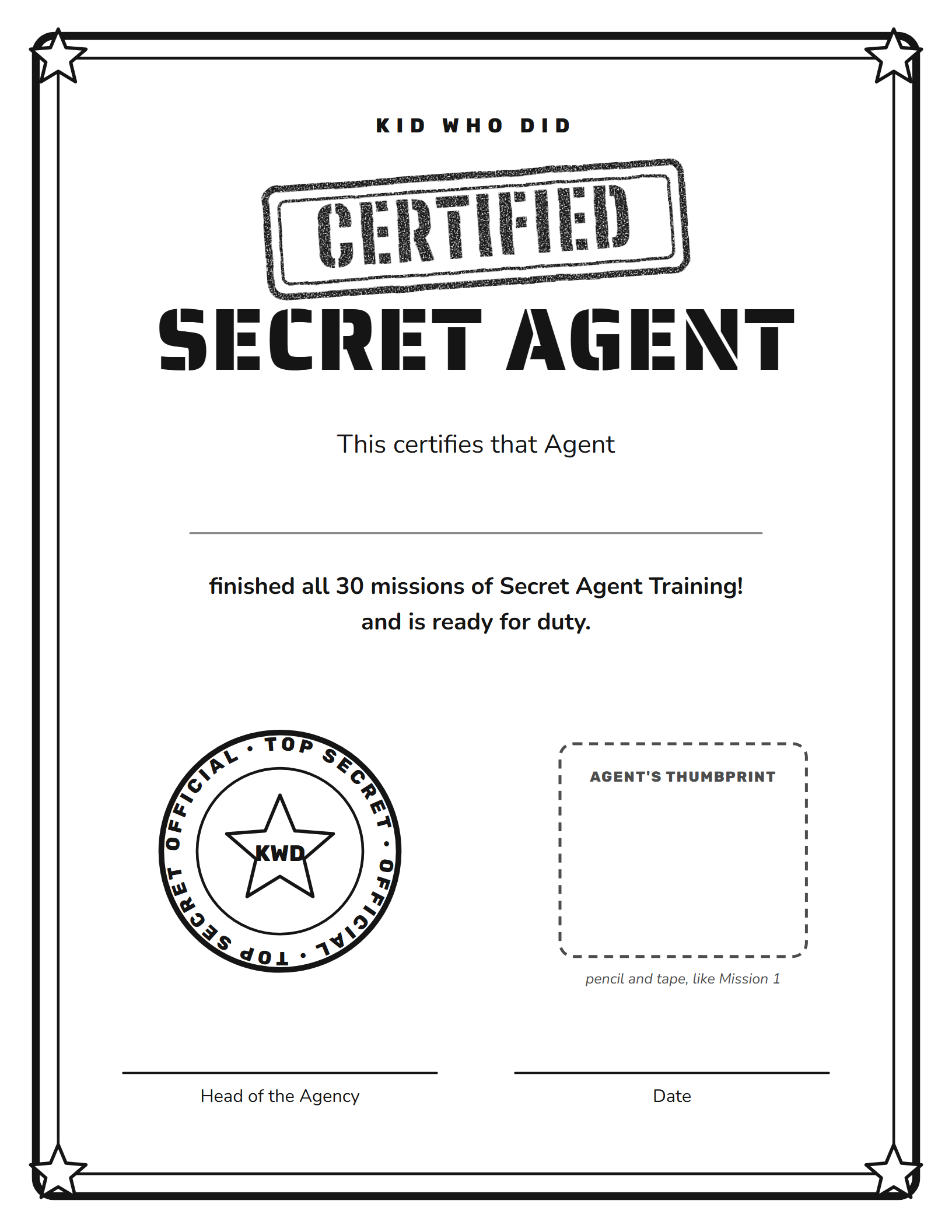
- The Agent Rules, a guide for grown-ups and a graduation certificate.
- Permission to print it as often as you need, for your home, your class or your group.
$27
One payment. Instant download.
Get the book for $27The 30-Day Mission Guarantee
If your agent hasn't cracked a code they're proud of within 30 days of buying, reply to your receipt email and we'll refund your $27. We'll take your word for it, and you keep the book.
Questions before you buy
What ages is it for?
8 to 12. The first missions are quick wins an 8-year-old can do alone, like making an agent ID card. The later levels build to a full mission for the family, which older kids love. Younger kids can join in with a grown-up.
What do we need?
A printer, pencils and scissors. A few missions use things from around the house, like a white crayon and watercolors, cocoa powder and a metal spoon, a paper fastener for the code wheel, or a die. Each mission lists what it needs at the top of the page.
Will it teach my kid to keep secrets from me?
No. The first Agent Rule is that codes are for games and surprises, and kids can always show their codes to a safe grown-up. If anyone asks them to keep a secret that worries them, they tell a safe grown-up. Several missions also need a grown-up to play the other side.
Does any of it happen online?
No. The online-safety missions use printed examples, so kids practice spotting fake links and photo clues on paper first.
Is it a printed book?
It's a PDF you download right after checkout. Print it at home or at a print shop, and print a page again whenever you need a fresh copy.
Can I use it with my class?
Yes. A teacher or group leader who buys it can print copies for their own class or group. Please don't share the file itself.
What if my kid doesn't like it?
If your agent hasn't cracked a code they're proud of within 30 days of buying, reply to your receipt email and we'll refund your $27. We'll take your word for it.
Mission briefing over
Mission 1 takes a few minutes: pick a codename and make an agent ID card. The rest of the training is in the book.
Get the book for $27